
NOW ACCEPTING NEW CLIENTS · FRIENDSWOOD + HOUSTON · TELEHEALTH IN TEXAS + MASSACHUSETTS
Addiction & Co-Occurring Disorders Counseling
for High-Achieving Adults
Success should not cost you your peace
Confidential, culturally responsive support for adults navigating alcohol or drug use, recovery, and the stress or emotional concerns that may complicate change.
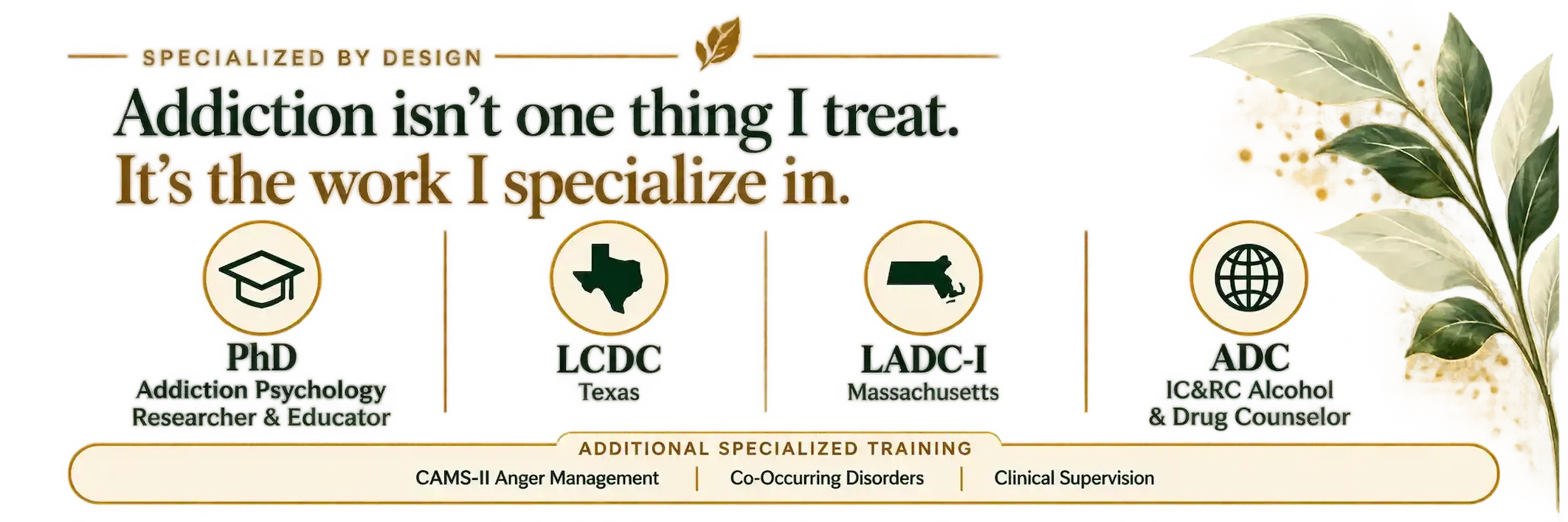
Dr. Esther Odamah, PhD · LCDC (Texas) · LADC-I (Massachusetts) · IC&RC Alcohol & Drug Counselor (ADC)
Designed to Overcome provides confidential, culturally responsive addiction counseling and co-occurring recovery support for high-achieving adults. Care is designed to consider the whole context of your life—not simply whether you use alcohol or drugs.
You may be carrying responsibilities that cannot simply be put on hold. A demanding career. People who depend on you. Relationships you value. Cultural or family expectations. The pressure to keep performing even when you are exhausted. And perhaps a growing realization that the way you have been coping is no longer working the way it once did.
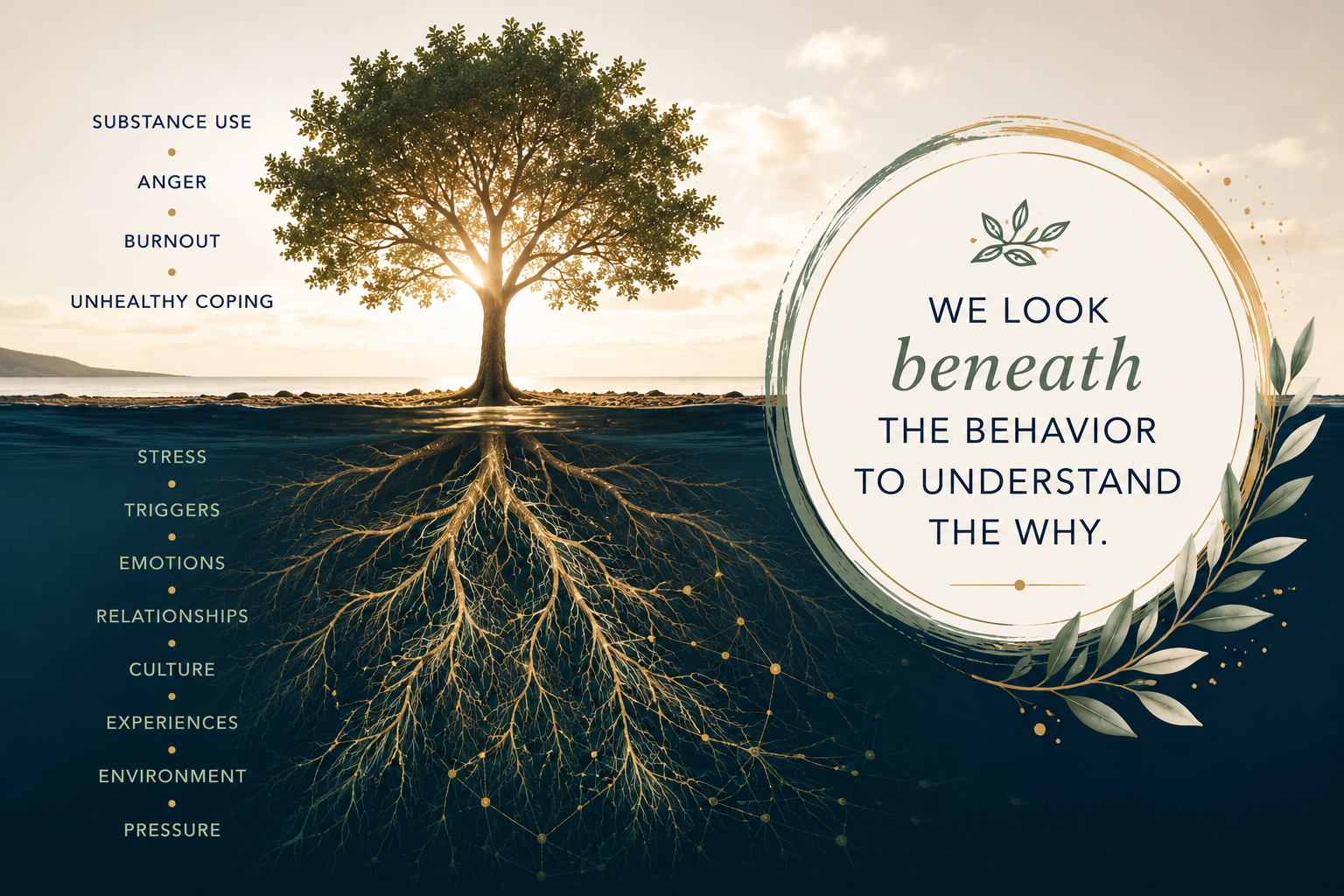
Here, we can look beyond the behavior itself to understand the stress, triggers, emotions, relationships, expectations, and patterns surrounding it—without reducing you to a diagnosis or asking you to leave important parts of yourself outside the counseling room.
The goal is not simply to stop a behavior. It is to understand the pattern, strengthen your ability to respond differently, and build change that can actually work in the life you are living.
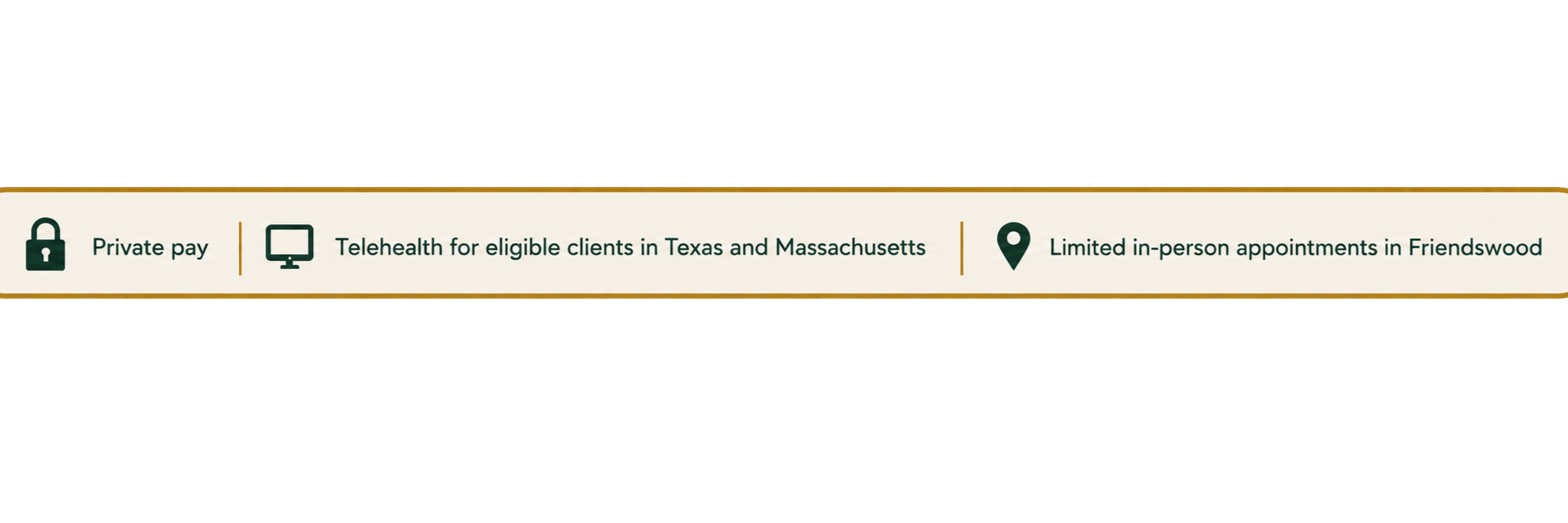
Services are available through secure telehealth for eligible clients physically located in Texas and Massachusetts, with limited in-person appointments in Friendswood, Texas.
“Recovery support should fit the real life you are living—
not ask you to step outside of it. Care that considers your culture, values, spirituality, relationships, responsibilities, and the pressures that can exist beneath outward success.”
— PRACTICE PHILOSOPHY
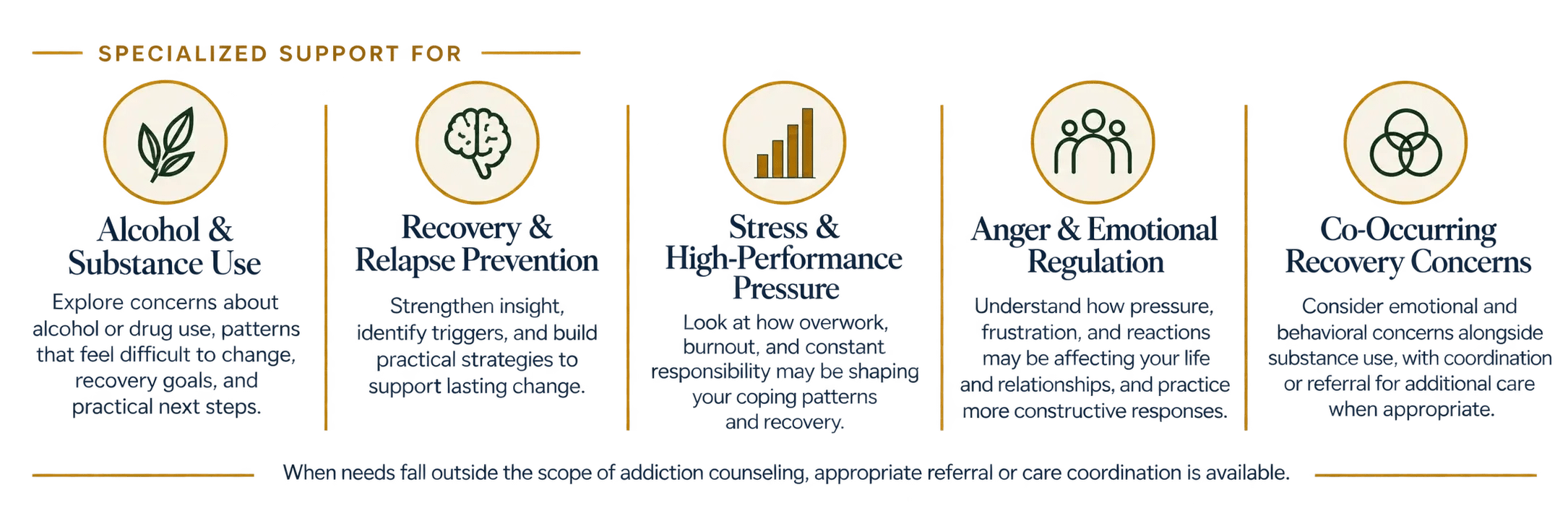
Services focus on substance use, recovery, relapse prevention, and related
co-occurring concerns.
When additional mental-health, psychiatric, medical, or higher-level care is needed,
appropriate referrals and care coordination are available.
—WHO THIS IS FOR
You are successful on the outside. That does not mean everything feels sustainable on the inside.
Designed to Overcome is for high-achieving professionals and other driven adults whose alcohol or drug use, recovery, stress, anger, or emotional exhaustion has begun to affect the life they have worked hard to build. You do not need to have reached a crisis point to seek confidential, practical support.
You are still functioning—but it is costing you.
You may be meeting deadlines, leading others, caring for family, or appearing “fine” while alcohol or drug use, stress, or exhaustion takes more from you than you want to admit.
You are private about what you are carrying.
You value discretion and may worry about being judged, misunderstood, or exposed. You want a place to speak honestly without having to perform, explain away, or protect everyone else from the truth.
You are considering recovery—or trying to protect it.
Whether you are questioning your relationship with substances, returning to recovery, rebuilding after a setback, or working to prevent relapse, you want a realistic plan that fits your responsibilities.
Alcohol or drug use no longer feels fully within your control.
What began as a way to unwind, cope, sleep, celebrate, or get through the day may now be affecting your work, relationships, health, finances, or peace of mind.
Stress or anger is affecting what matters most.
Pressure may be showing up through irritability, conflict, impatience, overwork, emotional shutdown, or reactions that do not reflect the person you want to be.
You want care that respects your real life.
Your culture, faith, family expectations, professional role, and personal values matter. You are looking for recovery support that recognizes the full context of your life—not a generic script.
FOCUSED AREAS OF SUPPORT
Specialized support for the pressures beneath the surface.
Your concerns may not fit neatly into one category. My work focuses on the intersection of substance use, emotional regulation,
high-pressure living, and the concerns that often occur alongside them.
01 — Substance Use & Addictions
When coping starts costing you more than it gives you.
Support for adults concerned about alcohol or drug use, recurring patterns of use, relapse, or growing dependence on substances to manage stress, pressure, emotions, or everyday life.
May include: Alcohol and drug use - Recovery support - Relapse prevention - Triggers and cravings - Healthier coping patterns
Explore Addiction Counseling → 01
02 — Anger & Emotional Regulation
When the pressure comes out as frustration, conflict, or loss of control.
Structured support for adults who want to better understand anger, recognize triggers, regulate intense emotions, communicate more effectively, and respond differently under pressure.
CAMS-II anger-management services may also be available for court, probation, employer, or other documented requirements.
May include: Anger and irritability - Emotional regulation - Conflict patterns - Trigger awareness - Communication skills
Explore Anger Management → 02
03 — Stress, Burnout, & High-Performance Pressure
When being capable has become exhausting.
For driven adults and professionals carrying demanding careers, leadership responsibilities, family expectations, or the constant pressure to perform.
Together, we explore how chronic stress and high-pressure environments can contribute to unhealthy coping—including substance use, anger, emotional withdrawal, and difficulty slowing down.
May include: Chronic stress - Burnout - Work-life imbalance - Perfectionistic pressure - Difficulty disconnecting - Unhealthy coping
Explore Support for Professionals → 03
04 — Co-occurring Recovery Support
Because substance use rarely exists in isolation.
Substance use and recovery can occur alongside anxiety symptoms, depressed mood, trauma-related experiences, grief, relationship stress, and other emotional concerns.
Your care considers the full context of your life while remaining centered on addiction counseling and recovery. When additional mental-health, psychiatric, medical, or higher-level care is appropriate, referrals and coordination with other qualified professionals are available.
May include: Anxiety symptoms - Depressed mood - Trauma-related concerns - Grief and loss - Relationship stress - Emotional distress
Learn About Co-Occurring Recovery Support → 04
CONCERNS THAT MAY BRING YOU TO COUNSELING
You may come in concerned about drinking, substance use, anger, or stress. But as we begin looking a the pattern, other experiences may also be affecting how you cope, respond, and recover.
Counseling considers these concerns within the context of addiction, substance use, recovery, and related behavioral patterns, with referral or collaboration with other qualified professionals when additional mental-health or medical care is appropriate.
Sometimes the problem you notice first is only part of the story.
“You are more than the concern that brought you here. ”
01 — Substance Use & Recovery
When substance use is becoming harder to manage or protect.
Alcohol use
Drug use
Increasing tolerance or frequency
Difficulty cutting back
Cravings and triggers
Relapse concerns
Recovery maintenance
Using substances to cope
02 — Pressure & Emotional Regulation
When the demands of life are affecting how you feel, react, or cope.
Chronic stress
Burnout
Anger and irritability
Emotional reactivity
Difficulty slowing down
Perfectionistic pressure
Work-life imbalance
Unhealthy coping patterns

03 — Co-Occurring Experiences
When other emotional experiences may be affecting recovery and well-being.
Anxiety symptoms
Depressed mood
Trauma-related experiences
Grief and loss
Emotional distress
Sleep-related concerns
Relationship difficulties
Life transitions
04 — Relationships, Identity & Environment
When your context is part of what you are carrying.
Family dynamics
Relationship conflict
Cultural expectations
Career pressure
Leadership demands
Caregiver stress
Isolation
Faith- or values-related concerns
Understanding what is underneath the pattern.
Alcohol or drug use, anger, burnout, and unhealthy coping rarely develop in isolation. They can be shaped by stress, relationships, culture, family experiences, environment, emotional patterns, and the demands of the life you are trying to maintain. That is why my approach looks beyond “What are you doing?” to also ask, “What is driving it?” Together, we identify the patterns, pressures, triggers, and underlying factors contributing to what you are experiencing—and build practical strategies for sustainable, recovery-focused change.
THE APPROACH
01 — Understand the Whole Picture
Biopsychosocial + culturally responsive
We look at the biological, psychological, social, cultural, relational, and environmental factors that may influence substance use, stress, anger, and recovery. Your life is the context for the work—not something separate from it.
02 — Identify the Pattern
Triggers + behaviors + consequences
We examine what happens before, during, and after the behavior. Understanding your triggers, thoughts, emotions, environments, and consequences helps reveal what may be keeping the cycle going.
03 — Build Different Responses
Evidence-informed + practical
Insight matters, but insight alone does not create change. Counseling may incorporate Cognitive Behavioral Therapy-informed strategies, Acceptance and Commitment Therapy-informed skills, Motivational Interviewing, relapse-prevention planning, psychoeducation, and DBT-informed emotional-regulation tools to help you practice healthier responses.
04 — Create Change That Fits Your Life
Individualized + sustainable
The goal is not to hand you a generic treatment plan. Together, we develop strategies that consider your responsibilities, relationships, culture, values, spirituality when desired, and the realities of your daily life.

CREDENTIALS
—PhD, Addiction Psychology
—MS, Psychology
—Licensed Chemical Dependency Counselor (LCDC), Texas
—Licensed Alcohol & Drug Counselor-Tier I (LADC-I), Massachusetts
—Certified Anger Management Specialist, Level II (CAMS-II)
—Active researcher in addiction & culturally responsive care
—ABOUT DR. ODAMAH
A lifelong calling, brought into clinical practice.
Dr. Esther Odamah’s connection to the people she serves began at age 11, growing up as the daughter of Christian missionaries from Nigeria. Her parents operate transitional homes that assist individuals facing addiction and mental health challenges, helping them rebuild their lives and pursue healing.
Through this early exposure to compassionate care and rehabilitation services, Dr. Odamah developed a deep, enduring calling to walk alongside individuals and families affected by substance use and emotional distress—a calling that has guided every stage of her training and professional work.
_________________________________
"Culture plays a vital role in both the development and treatment of addiction and mental health concerns."
Today, Dr. Esther Odamah leads Designed to Overcome, LLC, a private practice based in Friendswood, Texas, providing confidential, culturally responsive addiction counseling and co-occurring behavioral-health support for high-achieving adults. Licensed in Texas as a Licensed Chemical Dependency Counselor (LCDC) and in Massachusetts as a Licensed Alcohol and Drug Counselor I (LADC-I), she offers limited in-person appointments in Friendswood and secure telehealth for eligible clients physically located in Texas and Massachusetts.
With more than eight years of experience in addiction counseling, co-occurring substance-use and mental-health concerns, and related behavioral-health needs, Dr. Odamah combines doctoral-level training in addiction psychology with an evidence-informed, culturally responsive approach and active research in addictive behaviors, ethnic identity, and treatment outcomes.
Her work is intentionally collaborative and individualized. Each treatment plan begins with a careful assessment of your background, goals, current stressors, substance-use patterns, and the underlying factors affecting your well-being. Dr. Odamah considers culture, family, spirituality, community, professional demands, and the practical realities of your daily life as part of the counseling process.
The goal is not a one-size-fits-all protocol. It is a thoughtful, culturally responsive, evidence-informed plan that supports sustainable recovery and fits the life you are actually living.
—FREQUENTLY ASKED
Questions clients ask before reaching out.
If something here isn't covered, the simplest path is a brief phone or email exchange — there's no charge to ask whether we're the right fit.
-
Your first session is a confidential, collaborative conversation about what brought you to counseling, your goals, current stressors, relevant background, and the support you need. Dr. Odamah will help you explore substance-use, recovery, emotional-health, relationship, work, family, and cultural factors that may be affecting your well-being. Together, you will discuss whether outpatient counseling is an appropriate fit and begin identifying a plan that fits your life.
-
Standard individual sessions are about 50 minutes. Frequency is decided together based on your needs — typically weekly or bi-weekly at the start, with adjustments as you make progress.
-
It varies. Some clients work on short-term, focused goals over a few months. Others benefit from longer-term therapy for more complex or longstanding issues. You're in charge of the timeline — we reassess regularly.
-
Designed to Overcome is a private-pay, out-of-network practice. We don't bill insurance directly. Many clients prefer this for the additional privacy it offers — insurance reimbursement requires a formal mental health diagnosis that becomes part of your permanent medical record. We're happy to discuss session fees and provide a superbill if you'd like to request out-of-network reimbursement.
-
Session fees are discussed during your free initial consultation, based on session type and frequency. A superbill is available if you'd like to request out-of-network reimbursement from your insurance.
-
Yes. Secure telehealth counseling is available for eligible adults physically located in Texas or Massachusetts at the time of their appointment. Limited in-person appointments are available in Friendswood, Texas. We will discuss your location, needs, and whether outpatient counseling is the appropriate fit before services begin.
-
Yes. Dr. Odamah provides counseling for adolescents and adults experiencing substance-use concerns, stress, anger, trauma-related concerns, and co-occurring mental-health challenges. Family involvement, consent, privacy, and confidentiality are discussed clearly at the start of services. Telehealth may be available for eligible clients located in Texas or Massachusetts, with limited in-person appointments in Friendswood, Texas.
-
Both. Anger management is offered in individual and group/class formats depending on availability. Sessions include psychoeducation, skills training, and strategies for identifying triggers and improving self-control at home, work and in the community.
-
To schedule an initial session or follow-up, call (281) 317-0331 or email designedtoovercomellc@gmail.com. If you need to reschedule or cancel, please provide as much notice as possible. Our full cancellation policy is reviewed with you during intake.
-
A clinical assessment and evaluation is a structured process used to better understand concerns related to substance use, mental health, emotional regulation, behavior, coping patterns, and daily functioning. It may include a clinical interview, review of relevant history, standardized screening tools when appropriate, and discussion of current needs and goals.
The purpose is to identify relevant concerns, determine whether outpatient counseling is an appropriate fit, and develop thoughtful recommendations for next steps.
-
Assessments may address alcohol or drug use, relapse concerns, stress, anger, emotional regulation, trauma-related concerns, anxiety, depression, burnout, relationship difficulties, and co-occurring substance-use and mental-health concerns. The specific focus of the evaluation is determined by the reason for referral and the individual’s needs.
This may not be the right fit if:
You're in an active mental health crisis or having thoughts of harming yourself or others — please call 988 or go to your nearest emergency room instead of scheduling online.
You're looking for medication management — I don't prescribe, though I can coordinate with your psychiatrist or primary care provider as part of your care.
You need services covered directly by insurance billing — I'm a private-pay, out-of-network provider (see FAQ for why many clients still choose this).
If none of these apply, I'd love to hear from you.
—TAKE THE NEXT STEP
Reaching out is often the hardest part.
If you've read this far, something brought you here. A short
conversation can help you decide whether this is the right fit — no
pressure, no obligation.
Or email designedtoovercomellc@gmail.com
—CONTACT
Start with a brief message.
Share what you're navigating and what you'd like therapy to help with. Dr. Odamah reads each message personally and will respond within 1–2 business days.
BY PHONE
(281) 317-0331
Voicemail available 24/7 — calls returned during business hours.
BY EMAIL
designedtoovercomellc@gmail.com
Please don't include sensitive clinical details in your first email.
OFFICE
Friendswood, TX 77546
Limited In-person sessions by appointment · Telehealth available across Texas & Massachusetts.